Why good tech struggles to scale and how Malaysia’s MRANTI bridges the innovation gap
2026
GovInsider
Read More

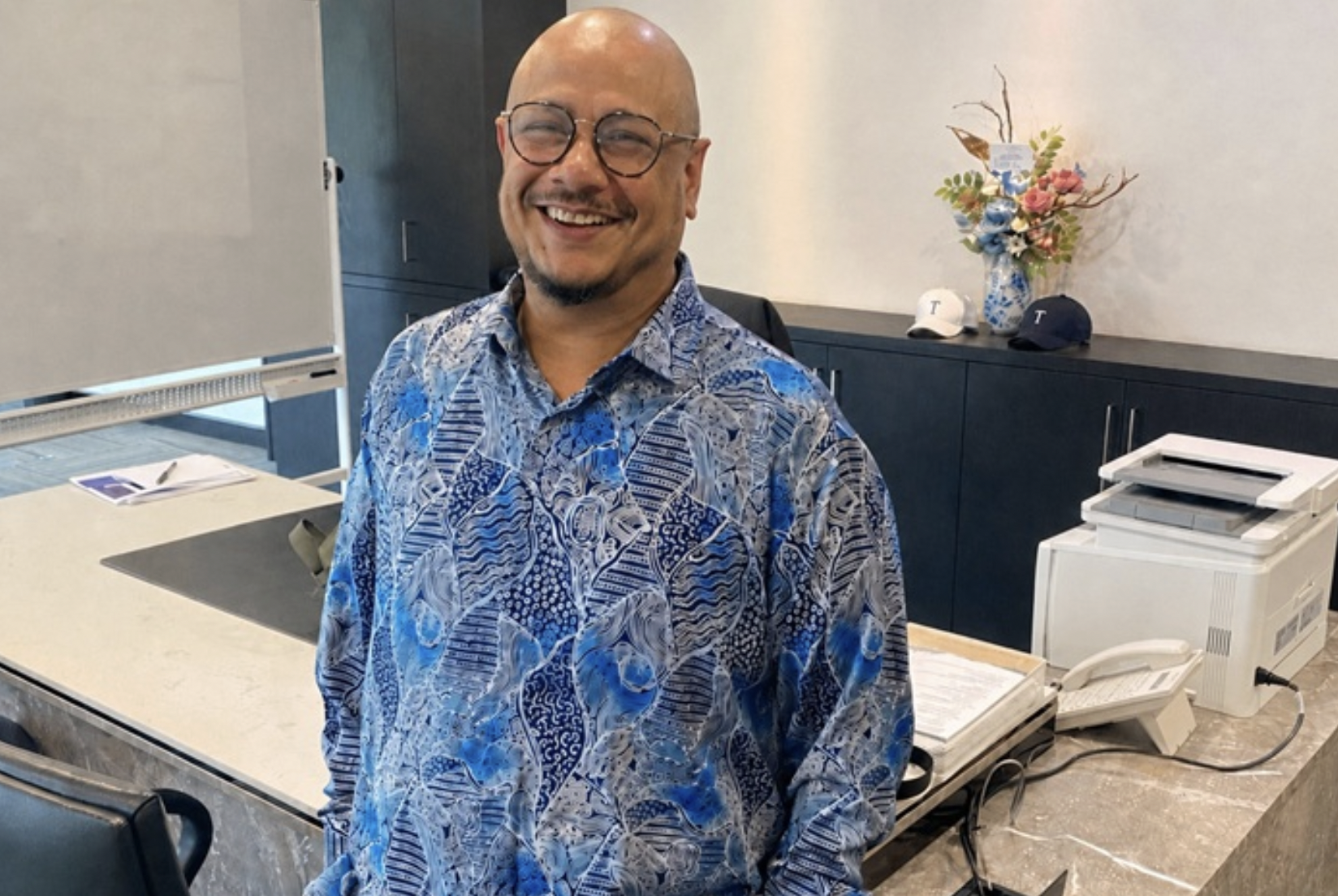
I realised I had dropped the ball when preparing for my May interview with Ashran Ghazi, MRANTI’s CEO, at his office in MRANTI Park. And I was upset with myself.
It harks back to the inaugural KL20 conference in April 2024, organised by the Economy Ministry as a marker of intent to propel Kuala Lumpur into a top-20 global startup ecosystem by 2030, based on Startup Genome’s Global Startup Ecosystem Report.
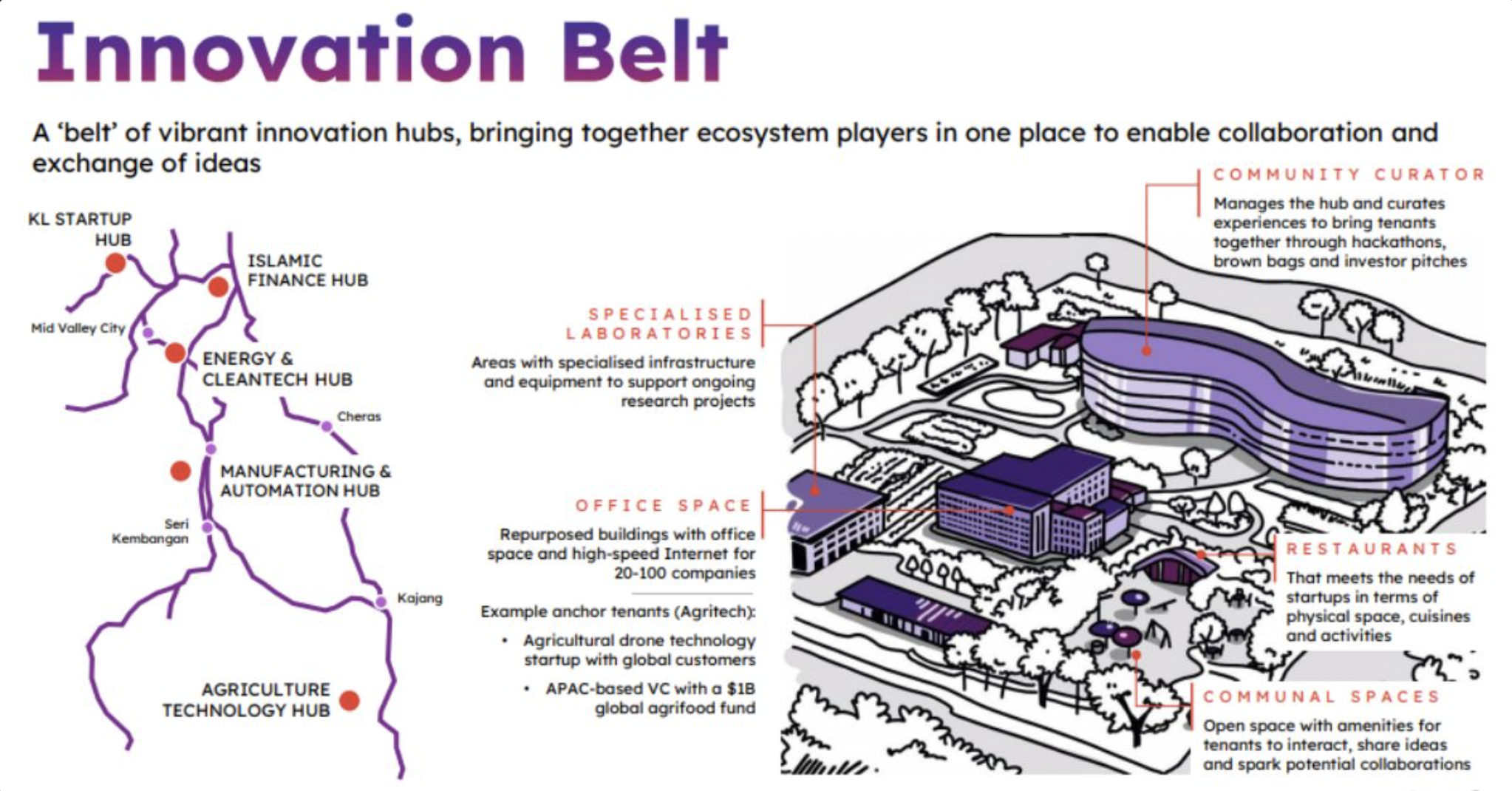
There was the KL20 Action Paper, new funding commitments (which got all the attention), incentives for VCs and foreign talent, an IC design park announcement, and the creation of the KL Innovation Belt or KLIB.
KLIB was the one that got me excited. Its goal was to create a concentrated ecosystem of startups, investors, corporates, universities and talent to ignite the network effects of physical proximity. MRANTI was tasked to lead this effort and its then CEO, Dr Rais Hussin, was equally excited about the outcomes a successful execution could create. The first phase focused on Bukit Jalil, where MRANTI is based, and Bangsar.
But after an initial post-KL20 event in May 2024, everything went quiet. Despite wanting to follow up, it slipped from my mind too. Which was why I spent the first six minutes of my interview pressing Ashran on it.
But Ashran is a pro who has been around the block, both as a serial founder since the mid 2000s and as former CEO of MaGIC, where he was recognised for having done a good job. When pressed for an update on KLIB, he surprised me by turning the question back on himself. He acknowledged that one thing he needed to improve as CEO was storytelling: not simply publicising individual MRANTI programmes, but explaining how its initiatives fit together and why they matter.
It was revealing because MRANTI is not short of activity. The harder task is showing how programmes, sandboxes, infrastructure, government agencies, industry partners and capital connect to move Malaysian technologies from research into adoption.
That is the story Ashran increasingly wants MRANTI to tell: an agency functioning as an accelerator for technology commercialisation rather than a collection of stand-alone initiatives.
Connecting KLIB to a larger commercialisation system
KLIB was announced as a network of innovation hubs to bring startups, investors and other ecosystem players together. MRANTI subsequently held a pre-onboarding session for seven selected startups at its Bukit Jalil park in the month after KL20, as DNA reported. And then there were no more updates.
Ashran framed KLIB as one piece of a broader commercialisation system, with MRANTI connecting technology development, validation, regulatory facilitation, corporate demand, financing and eventual market adoption.
The problem is that these elements are often presented separately. A startup may know about an accelerator, a researcher about a grant and a corporation about a testbed, without seeing the complete route to a commercially deployed solution. Ashran believes his job is to create a more coherent public narrative. The harder work sits beneath it: making sure the connections actually exist.
Malaysia already has researchers, startups, corporates, universities, investors and government agencies working on innovation. But many efforts remain disconnected, leaving promising technologies struggling to cross the gap between development and commercial use.
Part of fixing that involves being clearer about what constitutes success.
“The key metric is not just occupancy or infrastructure,” Ashran said.
For MRANTI Park, he wants success measured through pilots conducted, solutions commercialised and, crucially, whether those commercialisations become sustainable businesses.
This will be a refreshing change. Innovation agencies and public universities tend to point to patents, prototypes, startups trained, grants disbursed or memoranda signed. None automatically demonstrates that technology has found a customer, generated sustainable revenue or created wider economic value.
Between 2022 and 2025, MRANTI reported US$414.46 million (RM1.675 billion) in cumulative economic impact and participation by 7,394 startups, universities and SMEs. It also developed 16 innovation sandboxes. The challenge is proving how those activities translate into commercial outcomes.
Ashran is therefore positioning MRANTI less as the owner of individual programmes and more as the organisation connecting the pieces, hence his use of ‘orchestrator’ as part of his storytelling.
That thinking also underpins the physical transformation he wants for MRANTI Park. At an industry engagement in March, he described the park as the place where research, industry and capital should converge. “MRANTI Park is designed to be that platform, a place where technologies are developed, tested and scaled together with industry partners.”
Missions built around problems, demand and commercial value
Central to Ashran’s approach is what he calls Mission Driven Initiatives.
Instead of beginning with a programme and looking for participants, the model starts with a national problem, identifies an organisation that owns it, then brings together researchers, innovators, regulators, funders and potential buyers to solve it.
Ashran has been hammering home this focus as part of his effort to tell MRANTI’s story better. But it is still mostly talk, and he knows he needs a quick win.
Healthcare is the first major test.
“Under the framework, the Ministry of Health acts as the mission owner, while MRANTI coordinates the wider ecosystem of stakeholders around it,” Ashran said. The broader aim is to shift healthcare towards prevention, early intervention and long-term sustainability.
“The pilot is also targeting the onboarding of 30 local health technology firms and the validation of 15 local solutions through the MOH-MRANTI sandbox,” he added. The outcome of this pilot will be closely watched by the ecosystem. The solutions that come through the sandbox should be able to see commercial traction within the public health sector, where the government allocated US$11.55 billion (RM46.52 billion) under Budget 2026.
[Ed: Ashran has clarified that the pilot is not targeting procurement. Rather, it is trying to solve a mission owned by MOH which is Healthy Ageing and anchored by a private sector firm. The anchor company is then the potential buyer to local innovations.]
The change in emphasis is important because Ashran wants commercial demand built into the process early rather than waiting until a technology has been developed before asking whether anyone wants it. In other words, potential buyers and users should help shape the pathway to market, rather than appearing only at the end.
He reinforced the point in his own LinkedIn comments in May on Mission Driven Initiatives.
“It must have commercial value to all stakeholders,” he wrote, adding: “It must be with the willing, only then we can truly move mountains.”
This commercial lens runs through much of what Ashran is trying to do. Under the proposed model, corporate investment or expressions of demand should appear earlier; sandboxes should reduce regulatory friction; and public and private financing should work together rather than leaving government to carry most of the risk.
MRANTI’s National Technology and Innovation Sandbox (NTIS) provides an existing foundation.
By July, NTIS had facilitated more than RM171.8 million in commercialisation value, RM122.8 million in exports and 388 high-income jobs, according to MOSTI figures reported by Bernama.
[RM1 = US$0.248]
Ashran used NTIS’ recognition in July as a World Summit on the Information Society champion to reinforce the ecosystem argument he made in May.
“With the right ecosystem, regulatory support and strategic collaboration, high-potential technologies can grow from research into solutions that deliver real impact,” he told Bernama.
That is effectively the proposition MRANTI now has to prove at greater scale. It requires coordination across organisations with different KPIs, funding structures and definitions of commercialisation, while getting government agencies, corporates and innovators to share risk and incentives.
For Ashran, relationships are therefore as important as infrastructure.
“The real secret sauce is designing relationships where everyone benefits meaningfully,” he said.
Turning MRANTI Park into the place where it comes together
The physical expression of this strategy is inevitably centred at the 686-acre MRANTI Park in Bukit Jalil.
It already houses more than 150 technology companies and institutions and around 30,000 knowledge workers, with infrastructure ranging from drone-testing areas and autonomous vehicle facilities to 5G-enabled technology environments.
Ashran wants to move it beyond the traditional technology-park model towards what MRANTI describes as a Mission-Driven Innovation District.
MRANTI has invited developers, technology companies, investors and ecosystem builders to participate in the park’s next phase, with potential components spanning applied research, AI and digital clusters, innovation campuses, pilot zones and supporting residential, hospitality, retail and wellness facilities. Updates to these will be closely watched.
Since May, MRANTI has also articulated the commercialisation journey more explicitly through its 4D Pathway — Discover, Develop, Deploy and Dominate — supported by the SISTEM execution framework. The aim is to move technologies beyond experimentation towards adoption and scale.
Ashran’s comments around NICE 2026, which opened today in Kuala Lumpur and runs until Aug 28, reinforce the same thinking.
“NICE is not merely an expo but a platform that connects innovation with actual opportunities,” he told Bernama, referring to the National Innovation and Commercialisation Expo. Ashran will be speaking on the 28th about ‘Show Me the Money: Driving Returns From Malaysia's R&D Ringgit’.
The language is consistent with what he was saying in May: programmes matter only if they connect technologies to markets.
That brings the conversation back to his admission about storytelling.
Better communications can help innovators, corporates and investors understand what MRANTI offers. But storytelling alone will not solve Malaysia’s commercialisation challenge. Ashran first has to make KLIB, NTIS, Mission Driven Initiatives, industry partnerships and MRANTI Park work as one system.
If MRANTI succeeds, the story becomes easier to tell: Malaysian technologies being tested, finding customers, attracting capital, scaling into businesses and reaching markets beyond Malaysia.
That is a far more demanding measure of success than the number of programmes an innovation agency runs.