
Malaysia’s innovation ecosystem is entering a defining transition. For decades, success within research institutions was measured by familiar indicators: publication counts, journal impact factors, and the number of patents filed. While these metrics successfully built academic prestige, they did not automatically build sustainable industries. Increasingly, a deeper truth is becoming impossible to ignore: a patent is not a financial asset unless it is operationalised, adopted, and scaled in the real market.
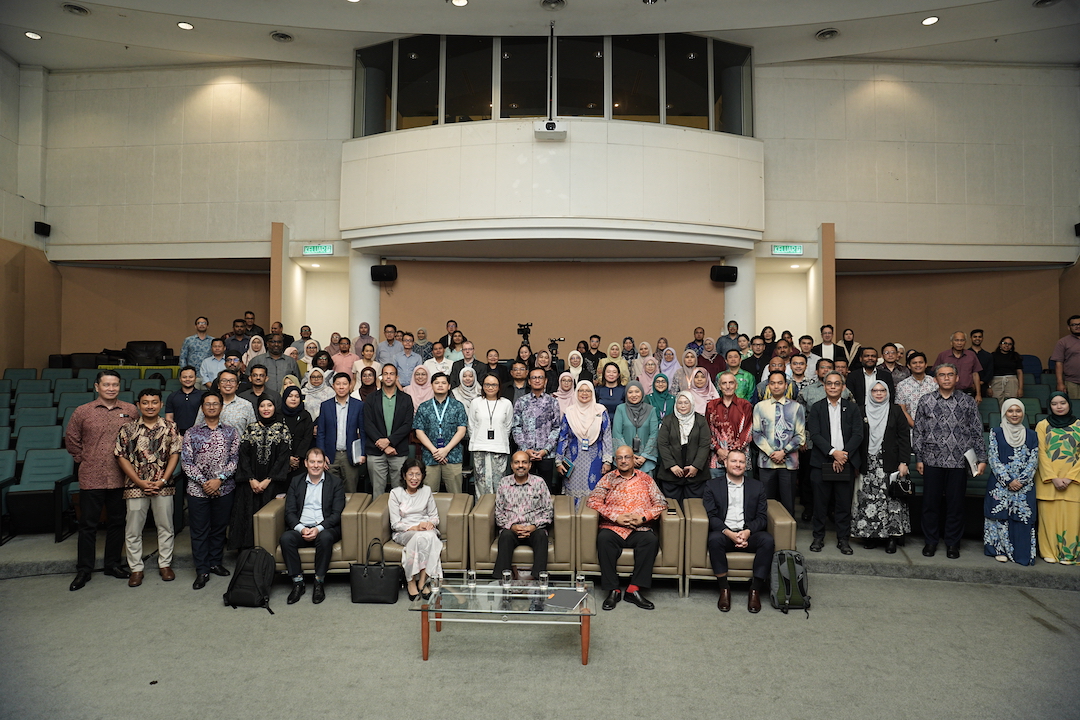
This emerging reality became the core theme during the opening session of MRANTI’s Commercialisation Blueprint Forum, "The Commercialisation Blueprint: From Intelligence to Impact". Organised by the Malaysian Research Accelerator for Technology and Innovation (MRANTI), the event brought together policymakers, industry leaders, researchers, and ecosystem enablers to address one of Malaysia’s most persistent economic bottlenecks: bridging the gap between laboratory research and commercial market adoption.
As Malaysia’s Technology Commercialisation Accelerator (TCA), MRANTI used this session to highlight a critical operational pivot: the country has no shortage of ideas; the challenge has never been invention, but conversion.
Breaking Fragmented Silos: The RDICE Realignment
The session immediately confronted a structural reality that has historically trapped high volumes of local R&D on institutional "bookshelves". To accelerate conversion, the ecosystem must bridge the historically siloed gaps within the traditional Triple Helix and fully activate the Quadruple Helix Model.
By intentionally integrating Society and the Community alongside Government, Academia, and Industry, innovations are co-designed from day one to serve both corporate demands and real-world public needs. This approach perfectly mirrors the national rollout of MOSTI’s
Research, Development, Innovation, Commercialisation, and Economy (RDICE) Roadmap, which was explicitly approved by the National Science Council (NSC) to eliminate piecemeal implementation and streamline public funding toward national socioeconomic priorities.
.JPG)
This exact shift in national strategy was captured in a direct reminder from the stage:
"Money is not the only solution. The commercialisation rate needs to be changed, and R&D translated into real outputs. We must break the silos between agencies, ministries, and companies. Put innovation at the centre stage, and get the alignment right." — YBhg. Dato' Ts. Dr. Nagulendran Kangayatkarasu, Secretary General of MOSTI.
Embedding Market Pull into R&D Funding
A major focus of the discussion centered on how research proposals are evaluated. Historically, technologies were often developed in isolation, with market considerations introduced far too late in the development cycle. Today, that sequence is no longer sustainable.
To enforce this change, the forum highlighted the growing importance of mission-oriented R&D funding. Moving forward, project budget proposals will look to integrate mandatory Cost-Benefit Analysis (CBA) frameworks, industry validation, and adoption readiness. This structural filter reorients public funding to favor technologies that demonstrate clear economic scalability and defined buyers from the beginning.
This demand-driven shift fundamentally alters the operational mandates of university Technology Transfer Offices (TTOs). Traditionally focused on internal patent filing processes, TTOs are now being upskilled through specialised capacity-building programs to evolve into market-facing commercial intermediaries capable of actively identifying industry demands and negotiating deployment pathways.
De-Risking Adoption via Shared-Risk Sandboxes
The session concluded with a highly practical look at industry adoption. Many private enterprises remain hesitant to adopt emerging local innovations due to financial risk and operational uncertainty.
To counter this risk aversion, MRANTI emphasised the critical deployment of shared-risk testbeds and pilot environments. Through national platforms like the National Technology and Innovation Sandbox (NTIS) and MRANTI’s specialised Living Labs, government agencies, corporate players, and researchers can jointly stress-test and validate emerging technologies under real operating conditions.
By co-developing these testbeds, the ecosystem accelerates trust-building, proves technological reliability under industrial conditions, and significantly reduces the barriers to commercial entry.
Ultimately, Session 1 made it clear that Malaysia’s innovation maturity will not be determined by how many patents are generated, but by how effectively those ideas are translated into tangible socioeconomic impact. This shift from "inventing first" to "designing for market readiness" marks the beginning of a highly aligned, synchronized innovation ecosystem.