Why good tech struggles to scale and how Malaysia’s MRANTI bridges the innovation gap
2026
GovInsider
Read More

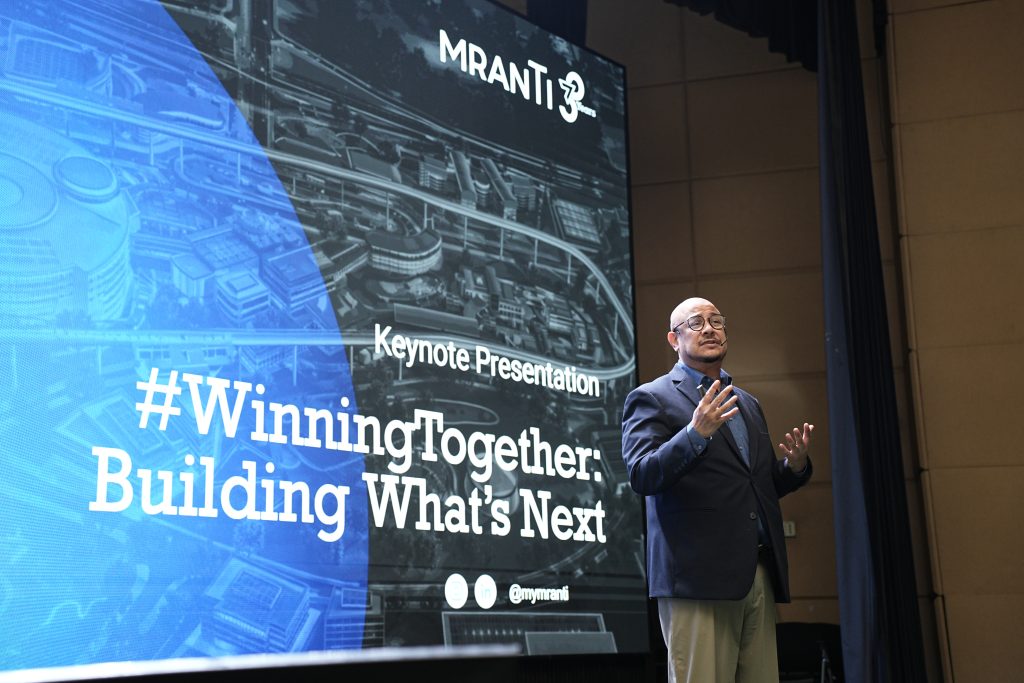
MALAYSIAN Research Accelerator for Technology and Innovation (MRANTI) is planning to transform its Bukit Jalil campus into a full-fledged innovation district and will open a request for proposal (RFP) in April to attract industry partners to co-develop the ecosystem.
Its CEO Ashran Ghazi said the move marks a shift from the traditional technology park model towards a collaborative innovation ecosystem focused on commercialisation.
“Most people know this place as Technology Park Malaysia, but where we aspire to move forward is to become an innovation district,” he said during an industry engagement session today.
Unlike conventional tech parks that measure success through occupancy rates, Ashran said MRANTI will prioritise real economic outcomes.
“The matrix of measurement is not the occupancy rate. It is how many pilots you run and how many actually make money,” he said.
MRANTI was formed in 2021 through the merger of Technology Park Malaysia and the Malaysian Global Innovation and Creativity Centre (MaGIC) to strengthen the country’s technology commercialisation ecosystem.
The Bukit Jalil campus spans about 245 hectares and hosts some 30,000 knowledge workers, with facilities including a 5G-enabled hub, R&D testbeds and autonomous vehicle testing infrastructure.
Ashran said MRANTI plans to invite developers, venture builders, technology firms and investors to participate in the park’s development through an RFP expected to be launched in early April.
“We are opening this up for partners to co-create together with us. This is an RFP for everyone, from ecosystem builders to developers and venture builders,” he said.
About 78 hectares of land within the campus remain available for development, which MRANTI plans to organise into specialised zones such as innovation gateways, learning hubs and living labs for technology testing.
The innovation district concept emphasises three key components – economic assets, physical infrastructure and networking assets.
While companies and facilities are important, Ashran said building strong connections among businesses, researchers and investors will be critical to driving innovation.
“The most important part is the networking assets, the relationships between people and companies,” he said.
MRANTI also operates two additional sites in Perlis and Raub, Pahang, covering about 202 hectares combined. The agency is seeking industry partners to develop the locations into biodiversity innovation centres focused on sustainable production and research.
Ashran said MRANTI hopes industry stakeholders will view the agency as a strategic partner rather than solely a government body.
“Please don’t see MRANTI as just a government agency. See us as another business entity trying to work out a deal so we can create a partnership,” he said.